-
Your Trusted Service Provider
- +91 8083256664
-
Rajeev Nagar Road No -0, Patna, Bihar
Glaucoma eye surgery
Glaucoma is a disease of the eye which exhibits a typical optic neuropathy which results in progressive visual field loss.The most important risk factor is raised intraocular pressure.Risk factors for glaucoma include age above 40 years, diabetes, myopia, mature cataract, trauma, certain retinal diseases and a family history of glaucoma. At SECC the patient is investigated thoroughly with use a of Perimetry, Ocular coherence tomography (OCT) and then the treatment is personalised to the patient to maintain his vision and quality of life.
Chronic Open Angle Glaucoma The most common type of glaucoma, known as chronic open angle (COAG) or primary open angle, occurs when the canals draining the eye of aqueous humor become clogged. This blockage can gradually increase pressure within the eye to damaging levels. No pain occurs, so individuals are usually unaware that these changes are occurring. There are no early signs or symptoms but over the years vision will be lost starting in the periphery and moving towards the central vision.
Acute Angle Closure Glaucoma When eye pressure builds up rapidly, it is called acute angle-closure glaucoma. This type of glaucoma commonly occurs in individuals who have narrow anterior chamber angles. In these cases, aqueous fluid behind the iris cannot pass through the pupil thus pushing the iris forward, preventing aqueous drainage through the angle. It is as though a sheet of paper floating near a drain suddenly drops over the opening and blocks the flow out of the sink. In cases of acute angle closure glaucoma, one may experience blurred vision, halos around lights, deep pain behind the eye, nausea, and vomiting. SECC advises its patients to have periodic eye examinations for early detection of glaucoma.
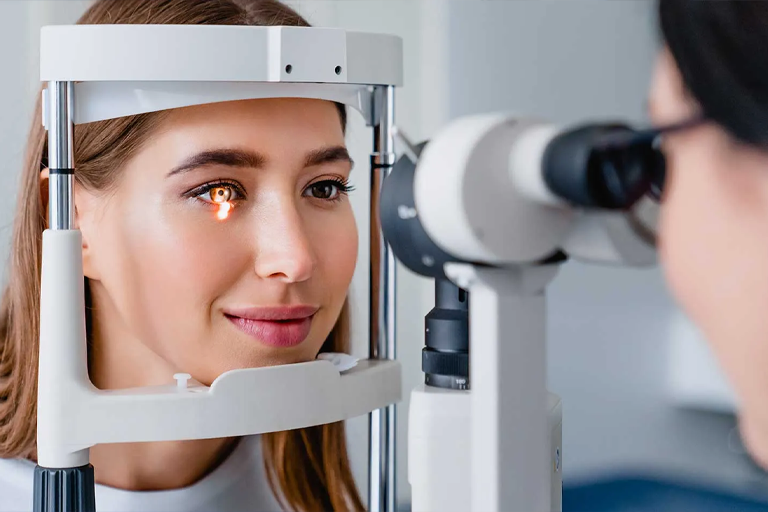
If you are suffering through one following problems, then you must have to under go check up for Glaucoma :
TREATING GLAUCOMA: Glaucoma can be treated with eye drops, pills, laser surgery, traditional surgery or a combination of these methods. The goal of any treatment is to prevent loss of vision, as vision loss from glaucoma is irreversible. The good news is that glaucoma can be managed if detected early, and that with medical and/or surgical treatment, most people with glaucoma will not lose their sight.
Taking medications regularly, as prescribed, is crucial to preventing vision-threatening damage. That is why it is important for you to discuss side effects with your doctor. While every drug has some potential side effects, it is important to note that many patients experience no side effects at all. You and your doctor need to work as a team in the battle against glaucoma.
Eye Drops It is important to take your medications regularly and exactly as prescribed if you are to control your eye pressure. Since eye drops are absorbed into the bloodstream, tell your doctor about all medications you are currently taking. Ask your doctor and/or pharmacist if the medications you are taking together are safe. Some drugs can be dangerous when mixed with other medications. To minimize absorption into the bloodstream and maximize the amount of drug absorbed in the eye, close your eye for one to two minutes after administering the drops and press your index finger lightly against the inferior nasal corner of your eyelid to close the tear duct which drains into the nose. While almost all eye drops may cause an uncomfortable burning or stinging sensation at first, the discomfort should last for only a few seconds.
Pills Sometimes, when eye drops don’t sufficiently control IOP, pills may be prescribed in addition to drops. These pills, which have more systemic side effects than drops, also serve to turn down the eye’s faucet and lessen the production of fluid. These medications are usually taken from two to four times daily. It is important to share this information with all your other doctors so they can prescribe medications for you which will not cause potentially dangerous interactions.